Monday, April 27

7 Worst Habits of Workaholics

It has been around 2 years since I joined the IT industry. For the first 10 months, I was really bored as I didn’t have much of work. Then, I started to get frustrated coz I felt I wasn’t given the amount and quality of work for which I was getting paid.

But, it was only since April last year that I got some real responsibilities. Then, I got power and I was satisfied. Slowly, I got more power and more responsibilities, and I was happy. Gradually, I became a workaholic.

It was only since the last 6 months that I started getting sick. I was hospitalized for about 2 weeks. Then, I made this research to find what went wrong. The following are the 7 worst habits of workaholics:

1. Forgetting to relax

While some stress can be good because it keeps you alert and motivated, too much stress or chronic stress will take its toll on your body.

2. Eating on the go

Between meetings, conference calls and deadlines, workaholics forget to take out time to sit down for a healthy lunch. But a good meal is exactly what a person needs to stay mentally sharp throughout the day.

3. Putting off sleep for work

Even busy professionals need seven to nine hours of sleep every night. Missing out on sleep can lead to irritability, difficulty concentrating, memory problems and poor judgment. It has also been linked to obesity.

4. Not making time for exercise

Getting at least 30 minutes of exercise most days is very important to immediate and future health.

5. Working even when sick

Many people come to work despite being ill. But there are three common sense reasons to stay home — nobody wants your germs, you’ll be less productive and you need your rest to get better.

6. Drinking (too much)

Excessive drinking can lead to alcoholism, liver disease and some forms of cancer.

7. Skipping annual medical check-ups

In order to detect problems early, prevent others from developing and get the best treatment if you have a condition, you need to know what’s going on in your body.

Although, I had taken care of the last 3 points; I am yet to take care of the first 4. Once I take care of all 7 of these, I guess, I can call myself a healthy workaholic.

Top 10 IT destinations in India

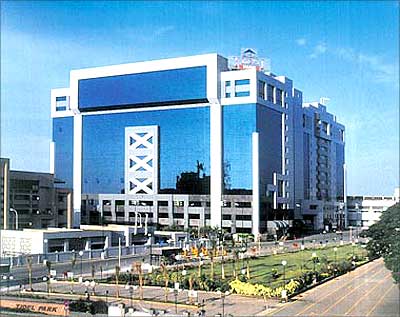
A study — conducted jointly by the National Association of Software and Services Companies (Nasscom) and global management consulting firm A T Kearney — has identified 10 cities in India that are good for the IT-BPO industry. The study took into account the following key parameters to arrive at its inference: Knowledge pool and skill-set availability; infrastructure; social and living environment; enabling business environment; government support; and operating cost. So here are India’s best cities for IT centres.

Rank 10: Nagpur

Nagpur, the second capital of Maharashtra, has for long suffered due to lack of strong leadership and political will. Thus the manufacturing boom that many other Indian cities embraced with elan bypassed Nagpur. However, as if to compensate for this ‘loss,’ the city has turned into a major trading hub.

Rank 9: Jaipur

The capital of Rajasthan, Jaipur is a major IT-BPO centre. The city has seen large investments by Genpact, Infosys, etc in the IT BPO sector, making it a vibrant destination for such companies. The boom in the IT sector in Jaipur has also led to a mushrooming of shopping malls, large retail outlets, entertainment facilities, etc. The boom has also attracted big funds into the city’s real estate sector too.

Rank 8: Mohali / Chandigarh

Mohali sits cheek by jowl to Chandigarh. The Punjab and Haryana governments’ incentives and friendly policies have seen many an IT-BPO firm set up base in the two cities. A vibrant IT talent pool, apart from impressive infrastructure attracts IT-BPO companies to these cities.

Rank 7: Kolkata

Often termed fondly as the cultural headquarters of India, Kolkata, the capital of West Bengal has a population of 5 million. The city has seen a surge of investments in the housing infrastructure sector.

Several new projects have come up in recent times. Kolkata has been ranked as the one of the most attractive destinations for investment, especially in the IT-BPO sector. The city has good infrastructure, great manpower and talent pool that make it an attractive base for many an IT-BPO firm.

Rank 6: Mumbai

Mumbai, the commercial capital of India, is one of the world’s top ten trade centres. The city contributes 25 per cent of industrial output and 70 per cent of capital transactions to India’s economy.

Rank 5: Pune

Pune, in Maharashtra, has emerged as not just a major automobile and manufacturing base, but also as a powerful software industry hub. Already IT giants Tata Consultancy Services, Infosys, Wipro, Infosys and Tech Mahindra have their base here. The booming information technology industry has seen Pune come forth as a force to reckon with. The city has good infrastructure, great talent pool, an enabling business environment, government support, etc have boosted the city’s image as one of the best to set up IT-BPO centres in India.

Rank 4: Hyderabad

Hyderabad, the financial capital of Andhra Pradesh, is also known as ‘Cyberabad’ because of the rapid progress it has made in the field of IT. As per 2006 statistics, the per capita income of Andhra Pradesh was at Rs 25,625 (less than Rs 200 of national average). The city, that used to be a service city, is now the seat of many businesses, including trade, transport, commerce, storage, communications, and most importantly IT. Like Bengaluru, Hyderabad too has witnessed a real estate boom in recent times, mainly because of the growth of IT and retail business in the city.

Rank 3: Chennai

Chennai, the capital city of Tamil Nadu, has emerged as a major exporter of software, IT, ITeS services in India.

Rank 2: Bengaluru

Bengaluru, the capital of Karnataka, is also called the Silicon Valley of India due to its towering stature in the field of information technology. For long considered one of the best places to do business in the wired world, Bengaluru’s creaking infrastructure is taking some gloss off its image. Yet, IT and BPO firms keep making a beeline for the city, because of the availability of talent and a great business environment. Bengaluru is home to India’s best known IT firms like Infosys and Wipro.

Rank 1: Gurgaon

Gurgaon is the best city for setting up a software or a business process outsourcing centre in India. The Haryana city is home to dozens of top BPO firms, earning it the sobriquet: India’s outsourcing hub.

Great physical and supporting infrastructure, availability of ample talent, impressive real estate boom, affordable cost of living, good governmental support, etc make Gurgaon the ideal choice for an IT-BPO centre. Beside this, workforce and proximity to the airport are some other crucial factors that are heavily considered by most investors before starting a BPO in Gurgaon. However, Gurgaon on its own might not bag the honours: other areas like Delhi, Noida, Faridabad and Ghaziabad, put together make this region a powerhouse when it comes to BPOs. Some of the BPO companies that are housed in Gurgaon include Wipro, HCL Technologies, HTMT, 24/7 Customer, Inc, Infosys BPO, Convergys, Accenture, MphasiS, Daksh, IGate Global, Transworks, Genpact, and WNS.

Are You gifted?

Intellectual giftedness is an intellectual ability significantly higher than average.

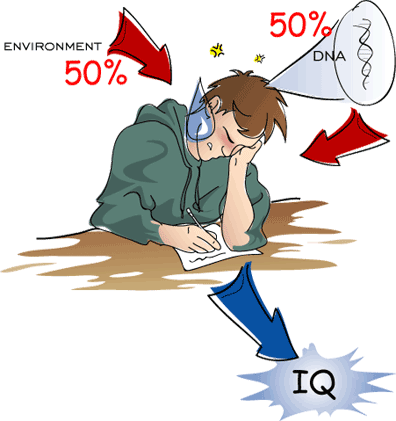
Giftedness is a trait that starts at birth and continues throughout the life-span. Giftedness is not a marker of success, but rather of aptitude or the inherent ability to learn. Gifted children often develop asynchronously; their minds are often ahead of their physical growth, and specific cognitive and emotional functions are often at different stages of development. Gifted individuals also experience the world differently, resulting in unique social and emotional issues. Some research suggests that gifted children have greater psychomotor, sensual, imaginative, intellectual, and emotional “over-excitabilities”. Many schools use a variety of measures of students’ capability and potential when identifying gifted children.

These may include portfolios of student work, classroom observations, achievement measures, and intelligence scores.

Most educational professionals accept that no single measure can be used in isolation to accurately identify a gifted child.

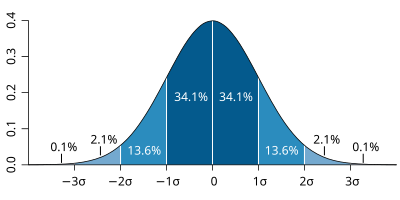
Most IQ tests do not have the capacity to discriminate accurately at higher IQ levels, and are perhaps only effective at determining whether a student is gifted rather than distinguishing among levels of giftedness. Although the Wechsler tests have a ceiling of about 160, their creator has admitted that they are intended to be used within the average range (between 70 and 130), and are not intended for use at the extreme ends of the population.


Generally, gifted individuals learn more quickly, deeply, and broadly than their peers. Gifted children may learn to read early and operate at the same level as normal children who are significantly older. The gifted tend to demonstrate high reasoning ability, creativity, curiosity, a large vocabulary, and an excellent memory.

They often can master concepts with few repetitions. Some gifted individuals experience heightened sensory awareness and may seem overly sensitive to sight, sound, smell and touch. For example, they may be extremely uncomfortable when they have a wrinkle in their sock, or unable to concentrate because of the sound of a clock ticking on the other side of the room. Hypersensitivity to external stimuli can be said to resemble a proneness to “sensory overload”, which can cause persons to avoid chaotic and crowded environments.

Others, however, are able to tune out any unwanted distractions as they focus on a task or on their own thoughts, and seem to seek and thrive on being in the midst of lots of activity and stimulation. Some children are born with innately higher intelligence levels than others. These children are often labeled as gifted or talented.

Monday, April 6

Safest cars till date...

Is your car safe enough? This is the primary question that arises in your mind when you look for a family car. Here is the countdown to 7 of the safest cars in the world:::

7. 7. Mercury Sable

Base MSRP:

$23,935.00

Base Invoice:

$22,096.00

Destination:

$800.00

Engine:

Engine-6 Cyl-V6

Transmission

Transmission-Auto-6 Spd

Body Style:

4dr Car

Drive Type

Drivetrain-FWD

6. Honda Pilot

Base MSRP:

$27,595.00

Base Invoice:

$25,010.8

Destination:

$670.00

Engine:

Engine-6 Cyl-V6

Transmission

Transmission-Auto-5 Spd

Body Style:

Sport Utility

Drive Type

Drivetrain-FWD

5. Infiniti FX

Base MSRP:

$38,050.00

Base Invoice:

$34,980.00

Destination:

$865.00

Engine:

Engine-6 Cyl-V6

Transmission

Transmission-Auto-5 Spd

Body Style:

Sport Utility

Drive Type

Drivetrain-RWD

4. Lincoln Town Car

Base MSRP:

$45,295.00

Base Invoice:

$41,626.00

Destination:

$920.00

Engine:

Engine-8 Cyl

Transmission

Transmission-Auto-4 Spd

Body Style:

4dr Car

Drive Type

Drivetrain-RWD

3. Jeep Grand Cherokee

Base MSRP:

$29,420.00

Base Invoice:

$27,009.00

Destination:

$730.00

Engine:

Engine-6 Cyl-V6

Transmission

Transmission-Auto-5 Spd

Body Style:

Sport Utility

Drive Type

Drivetrain-RWD

2. Jeep Commander

Base MSRP:

$28,330.00

Base Invoice:

$26,054.00

Destination:

$730.00

Engine:

Engine-6 Cyl-V6

Transmission

Transmission-Auto-5 Spd

Body Style:

Sport Utility

Drive Type

Drivetrain-RWD

1. 1. Ford Taurus


Base MSRP:

$23,635.00

Base Invoice:

$21,801.00

Destination:

$800.00

Engine:

Engine-6 Cyl-V6

Transmission

Transmission-Auto-6 Spd

Body Style:

4dr Car

Drive Type

Drivetrain-FWD

Planning for an Indian wedding?

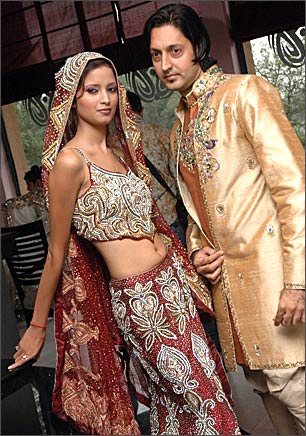
Wedding exhibition Bride & Groom 2008 was held in Delhi last year. The event showcased everything from this year’s decorating trends to mehendi to clothes and jewellery. Here’s a sneak peek at what trendy couples will be wearing for their nuptials.Fancy looking like a mermaid at your sangeet? This beautiful aqua-silver ghagra choli is from the ‘Manthan of Moods’ collection by designer Sulakshna Monga. Sagar Mehra’s collection sported plenty of colour and jewelled embroidery. Seen here is a heavy but tasteful bridal ensemble in traditional hue, matched with a champagne sherwani for the groom.

Metal glam continues to be a hot favourite this season — a sari by Megha Hasija shows off Mughal inspiration with rich embellishment and shimmery tone.

If you want to make a statement at a cocktail function, this rich dress by Sulakshna Monga is just right — note the encrusted bodice.

This beige ‘n’ gold sari with heavily worked choli, also by Sulakshna, is suited to the bride who doesn’t like too many embellishments.

Designer Anubha’s collection, Le Divas, boasted of several such outfits with becoming touches and light pastel colours.

Designer Radhika poses with a model wearing one of her creations, an Indo-Western fusion in electric colour.

Lovely, huh! Go for a design that suits you the most. Cheers!!!

Unwanted species

Shipwrecks on coral reefs may increase invasion of unwanted species, according to a recent U.S. Geological Survey study. These unwanted species can completely overtake the reef and eliminate all the native coral, dramatically decreasing the diversity of marine organisms on the reef.

This study documents for the first time that a rapid change in the dominant biota on a coral reef is unambiguously associated with man-made structures. The findings of the study suggest that removal of these structures sooner rather than later is key to keeping reefs healthy.

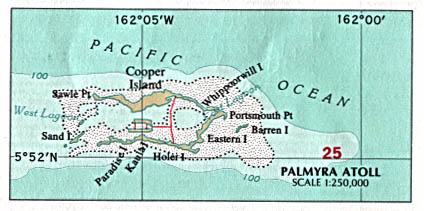
Overgrowth of coral reefs by other species, such as algae, are usually attributed to environmental degradation, but bleaching, disease, damage by typhoons, overfishing, coastal development, pollution, and tourism can cause problems as well. The study was conducted at Palmyra Atoll National Wildlife Refuge in the central Pacific, a relatively remote, comparatively pristine area where little human activity has occurred since WWII. In 1991, a 100-foot vessel shipwrecked on the a toll. Scientists first surveyed the area in 2004 and found a species called Rhodactis Howesii —an organism related to sea anemones and corals—in low abundance around the wreck.

In subsequent years, however, populations of this organism increased exponentially. Scientists documented extremely high densities of R. Howesii that progressively decreased with distance from the ship, whereas R. Howesii were rare to absent in other parts of the atoll.

They also confirmed high densities of R. Howesii around several buoys. Whether this phenomenon occurs on other coral atolls is unknown; however, in the case of Palmyra, the R. Howesii infestation is beginning to reach catastrophic proportions, according to Dr. Thierry Work, the lead author of the study and a scientist at the USGS National Wildlife Health Center, Honolulu Field Station. Within a few years, R. Howesii spread to where it now occupies nearly 1 square mile. “Why this phenomenon is occurring remains a mystery,” said Work.

One possibility, he said, is that iron leaching from the ship and mooring buoy chains, accompanied with other environmental factors particular to Palmyra atoll, are somehow promoting the growth of Rhodactis. “Given the ability of Rhodactis sp. to rapidly reproduce and completely smother reefs, managers are now facing the possibility that even with removal of the ship, sheer reproductive capacity of R. Howesii may continue to fuel its spread along the western reef shelf of Palmyra,” Work said.Understanding what constitutes a healthy underwater ecosystem, as well as what does not, is crucial to preventing further losses in species and habitat.

This research illustrates a little-known problem that, unlike global warming and pollution, could be prevented by removing man-made debris such as shipwrecks from coral reefs before organisms like Rhodactis Howesii can overtake healthy coral reefs.